The GCC Luxury Fashion eCommerce Report 2026: Why Fashion Owns the Gulf's Online Basket
A MODULA Intelligence Report on Gulf fashion e-commerce: fashion at ≈ 37% of Saudi and ≈ 30% of UAE online GMV, the omnichannel third, cross-border competition, and the imagery standards that decide conversion in this region.
Executive summary
In most of the world, electronics leads online retail. In the Gulf, fashion does. Redseer's November 2025 analysis puts fashion at ≈ 37% of online retail GMV in Saudi Arabia and ≈ 30% in the UAE — dramatically higher than in the US or major Asian markets. The Gulf is, structurally, a fashion-first e-commerce region.
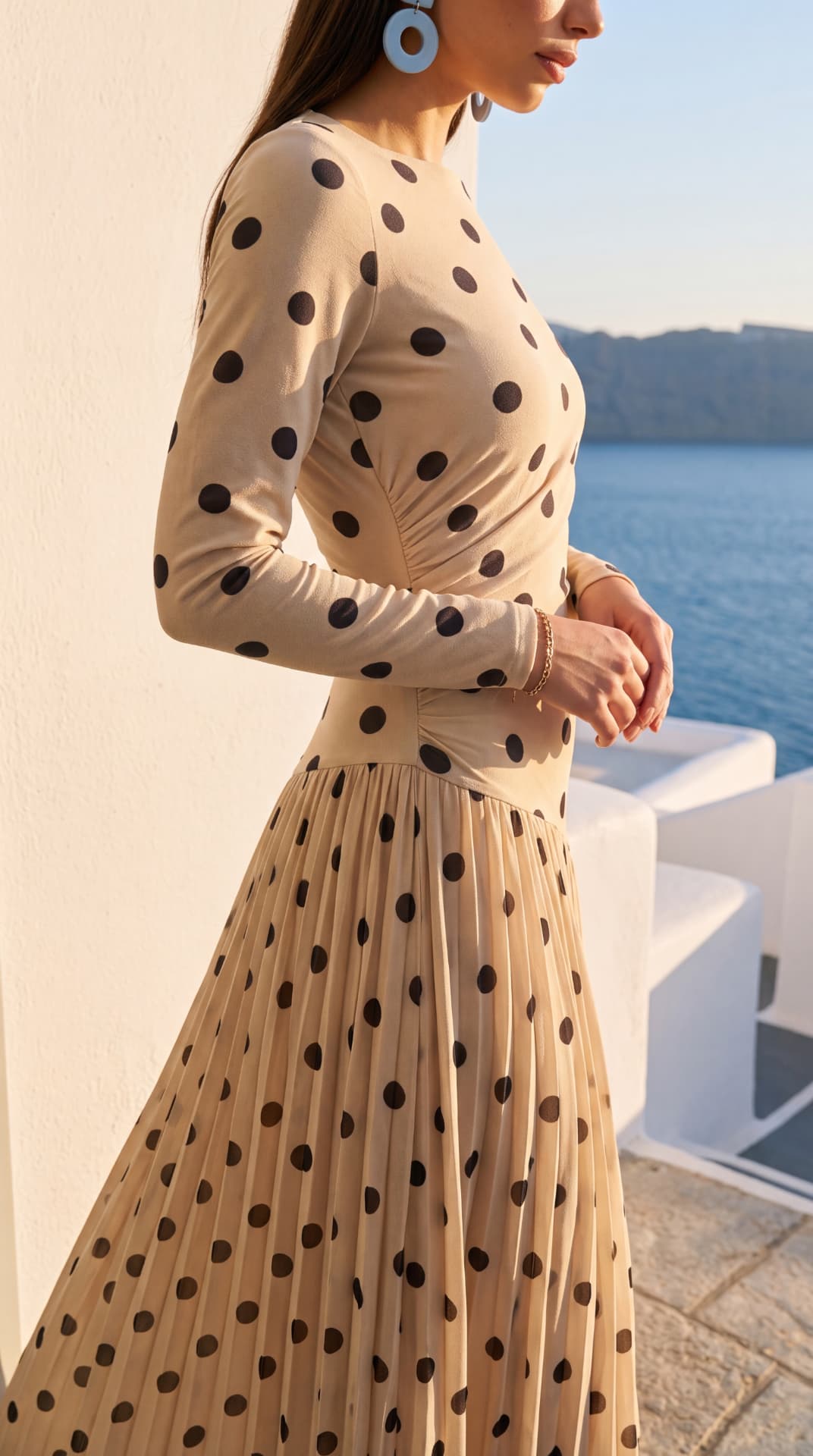
That has a direct consequence for brands: in a fashion-first market, product imagery is not a supporting asset. It is the storefront, the fitting room and the sales associate at once. Brands that under-invest in per-SKU visual quality are competing at a permanent conversion disadvantage that no ad budget fixes.
Key findings
- Fashion is the largest online retail category in the GCC: ≈ 37% of GMV in Saudi Arabia, ≈ 30% in the UAE (Redseer, November 2025).
- Online retail penetration is close between the two leading markets — UAE ≈ 16%, Saudi ≈ 15% — but Saudi consumers are more digitally engaged in fashion and beauty specifically (Redseer, July 2025).
- Omnichannel drives more than a third of all GCC online retail; the region does not split cleanly into online and offline buyers (Redseer, November 2025).
- Cross-border trade commands a significant share of Gulf online transactions, meaning local brands compete with international sellers on the same product pages (Redseer, November 2025).
- 20–30% of UAE offline fashion and beauty spend comes from tourists, which mechanically suppresses the UAE's apparent online share (Redseer, July 2025).
- McKinsey and BoF identify generative and agentic AI as a fast-moving force in discovery and commerce heading into 2026, raising the volume of imagery brands need to stay visible.
Methodology: this report synthesises published third-party research and states the definition and year used by each publisher. Commercial research-house market sizes (Research Intelo, HTF, Mordor and similar) are modelled estimates whose methodologies are not fully public; they are reported here as ranges and directional signals, not as audited facts. Consultancy and retail-group data (Chalhoub, Redseer, McKinsey/BoF) is based on observed transaction and survey data and is weighted more heavily. Any conclusion attributed to MODULA is interpretation, not measurement.
The competitive structure of Gulf fashion e-commerce
Redseer describes the GCC online retail market as unusually “democratic” — not dominated by one or two mega-platforms the way the US or China are. For a fashion brand this is genuinely good news: distribution is not gatekept by a single marketplace, and a direct-to-consumer site can win share. It also means discovery is fragmented across marketplaces, social platforms, regional e-tailers and brand sites, and the same catalogue has to look right in all of them.
| Surface | What converts | Common failure |
|---|---|---|
| Brand D2C product page | 6–10 images per SKU: on-body, movement, detail, scale | Two flat images and no fabric detail |
| Regional marketplace | White or neutral background, consistent crop, fast load | Editorial-only assets that break the grid |
| Social discovery | Motion, face, context, first frame legibility | Reposted still catalogue images |
| Paid performance | Multiple variants per concept for testing | One hero asset reused for months |
| AI-assisted search and summaries | Descriptive alt text, structured data, clear naming | Unlabelled images and generic filenames |
Consumer behaviour
- Arabic-language experience is expected; English-only product content signals a foreign seller and reduces trust.
- Returns behaviour is sensitive to imagery accuracy: colour and fit misrepresentation is the main controllable driver of returns in apparel.
- Payment and delivery preferences remain market-specific; cash on delivery has declined but has not vanished.
- Shoppers routinely research online and buy in store, and vice versa — hence the omnichannel third.
Opportunities
- Per-SKU visual depth: most mid-market brands publish two to three images per product where six to ten converts materially better.
- Motion at scale: short product-level video is still rare below the top tier of brands.
- Arabic-first merchandising, including image text, size guidance and styling notes.
- Image SEO and structured data: as AI search summarises product categories, well-labelled imagery becomes a discovery asset.
Risks
- Cross-border price competition compressing margin on comparable products.
- Discount-led feeds eroding premium positioning faster than campaigns can rebuild it.
- Visual inconsistency across marketplaces, which reads as a lack of brand control.
- Under-resourced localisation: machine-translated copy paired with Western-styled imagery is the clearest possible signal of a non-committed entrant.
Forecast
With total GCC fashion retail forecast at ≈ USD 127bn by 2030 (Redseer) and online holding the largest category share, the absolute volume of fashion imagery required in this region will rise faster than budgets. MODULA's interpretation is that per-SKU production economics — not creative talent — will become the binding constraint for mid-market brands, which is why hybrid production models combining photography with AI-assisted variant generation are moving from experiment to default.
- Why is fashion so dominant in Gulf online retail?
- Redseer attributes it to consumer preference and category maturity: fashion commands ≈ 37% of online GMV in Saudi Arabia and ≈ 30% in the UAE, well above mature Western markets where electronics usually leads.
- How many product images should a fashion brand publish per SKU in the Gulf?
- In practice, six to ten: front and back on-body, a movement frame, at least two fabric or construction details, a scale reference and a styled context image. Two images is a conversion handicap in a fashion-first market.
- Is Saudi Arabia or the UAE the better e-commerce entry point?
- Saudi Arabia for volume and online fashion engagement; the UAE for brand visibility, tourism exposure and regional media reach. Most brands eventually need both, but the sequencing depends on whether the priority is revenue or positioning.
- Does AI-generated imagery work for Gulf e-commerce?
- For variant and context imagery, yes, provided the base product representation is accurate. Misrepresenting colour, fabric or fit raises returns and damages trust, so accuracy discipline matters more than visual ambition.
Sources
- Redseer Strategy Consulting, “GCC's Online Retail Market is Truly Democratic”, November 2025 — fashion is the largest online retail category at ≈ 37% of GMV in Saudi Arabia and ≈ 30% in the UAE; cross-border trade is a significant share of transactions; omnichannel drives more than a third of online retail.
- Redseer Strategy Consulting, “KSA is the Online Fashion & BPC leader in GCC”, July 2025 — UAE online retail penetration ≈ 16% vs Saudi ≈ 15%; Saudi leads specifically in online fashion and beauty; 20–30% of UAE offline fashion and beauty spend is tourist spend.
- Redseer Strategy Consulting, “GCC Fashion Market Outlook”, April 2025 — GCC fashion retail ≈ USD 85bn, forecast ≈ USD 127bn by 2030 at ≈ 7% CAGR; UAE and Saudi Arabia ≈ 80% of the market.
- McKinsey & Company and BoF Insights, “The State of Fashion 2026: When the Rules Change”, November 2025 — value-seeking consumers, trade reconfiguration and the rapid onset of generative and agentic AI in discovery and commerce.
- Chalhoub Group, “GCC Personal Luxury 2024: Unstoppable”, May 2025 — GCC personal luxury retail sales USD 12.8bn in 2024, +6% YoY; Q1 2025 luxury fashion +11%, with a favourable Ramadan calendar cited as a contributing factor.
Working with MODULA
If your Gulf product pages carry fewer than six images per SKU, imagery — not traffic — is probably your conversion ceiling.
MODULA is an Israel-based AI fashion production studio specialising in premium and modest fashion, combining luxury fashion strategy, creative direction, visual branding and AI-assisted campaign production. We build a distinct visual system per market rather than one Gulf-wide template. Talk to us on WhatsApp about your collection and your target country.
מאמרים קשורים
The GCC Luxury Retail Report 2026: Malls, Boutiques, Omnichannel and the New Economics of Presence
A MODULA Intelligence Report on how luxury fashion is actually sold in the Gulf: the mall-anchored retail model, the boutique channel's USD 13.5bn scale, the rise of omnichannel, and why physical presence is now a media decision as much as a distribution one.
English GuidesThe Saudi Fashion Industry Report 2026: Market Size, Vision 2030 Policy, Consumer Shift and Entry Strategy
A MODULA Intelligence Report on Saudi Arabia: the largest fashion market in the Gulf, the state programmes reshaping it, the conflicting published market sizes and what they mean, and how brands should approach a market that is young, digital and rapidly re-defining modest luxury.
English GuidesThe UAE Luxury Fashion Consumer Report 2026: Market Size, Consumer Segments and What Brands Get Wrong in Dubai
A MODULA Intelligence Report on the United Arab Emirates: how a market of roughly ten million residents became one of the most concentrated luxury fashion economies on earth, who is actually buying, and what international brands consistently misread about Dubai and Abu Dhabi.