The Luxury Abaya Market Report 2026: Size, Segmentation, Design Economics and Campaign Strategy
A MODULA Intelligence Report on the abaya as a luxury category: what the published market estimates do and do not prove, how the product is segmented from everyday to couture, who competes, and how premium abaya brands should be photographed and marketed.
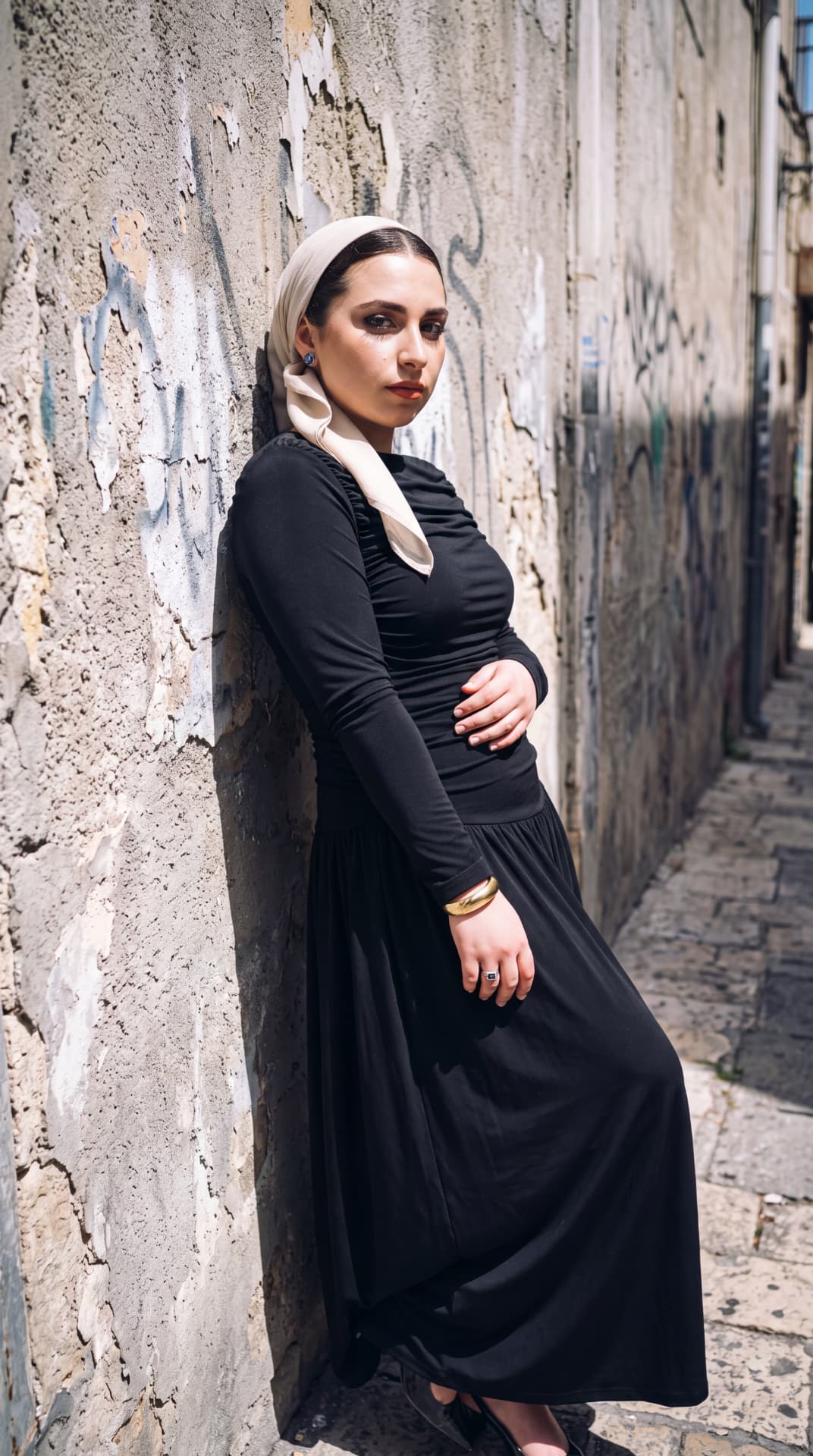
Executive summary
The abaya is the only garment category in which Gulf brands, not European maisons, set the global standard. It is also one of the least well-measured categories in fashion. Published global abaya market estimates cluster around USD 3.2bn for 2024 with mid single-digit growth to the early 2030s, but these are modelled commercial estimates, not audited figures, and they mix mass-market and couture production in one number.
For a premium brand the useful insight is not the headline size. It is that the category has bifurcated: a high-volume, price-led segment that competes on fabric cost and delivery, and a design-led segment where a single piece can carry couture pricing. These two segments require entirely different visual production, and most brands photograph the second as if it were the first.
Key findings
- Global abaya market estimated at ≈ USD 3.2bn (2024), projected ≈ USD 5.7bn by 2033 at ≈ 6.4% CAGR — a commercial research-house estimate with non-public methodology (Research Intelo, 2025).
- Regional modest-fashion research segments the market by category (abayas, hijabs, modest dresses, kaftans, modest swimwear) and by price tier from mass market to luxury, confirming that a single abaya figure hides very different businesses (HTF Market Intelligence, 2026).
- Saudi Arabia is the largest fashion market in the Gulf at an estimated USD 36.8bn by 2025 and is the primary demand centre for the category (Saudi Fashion Commission via SPA, 2025).
- Fashion dominates Gulf online retail — ≈ 37% of GMV in Saudi Arabia, ≈ 30% in the UAE — so abaya discovery and purchase are substantially digital (Redseer, November 2025).
- Regional named players in modest apparel research include Leem and Lomar (Saudi Arabia) and Niswa Fashion (UAE), alongside international modest platforms such as Modanisa (HTF, 2026).
Methodology: this report synthesises published third-party research and states the definition and year used by each publisher. Commercial research-house market sizes (Research Intelo, HTF, Mordor and similar) are modelled estimates whose methodologies are not fully public; they are reported here as ranges and directional signals, not as audited facts. Consultancy and retail-group data (Chalhoub, Redseer, McKinsey/BoF) is based on observed transaction and survey data and is weighted more heavily. Any conclusion attributed to MODULA is interpretation, not measurement.
Segmentation: five distinct businesses in one category
| Tier | What defines it | Visual requirement |
|---|---|---|
| Everyday / functional | Price, fabric weight, availability | Clean e-commerce imagery, accurate colour, movement shots |
| Contemporary premium | Cut, drape, subtle detailing | Editorial-lite lifestyle imagery, real environments |
| Designer | Signature silhouette, recognisable house codes | Campaign photography with consistent art direction |
| Occasion / evening | Embellishment, embroidery, event context | Low-light editorial, fabric close-ups, motion |
| Couture / made to order | One-off construction, client fitting | Atelier storytelling, detail macro, process film |
MODULA interpretation: the fastest visible upgrade for most abaya brands is not a new collection — it is separating commerce imagery from campaign imagery. Selling a couture piece with a flat catalogue shot destroys the price justification the garment already earned.
Design economics
Abaya margins are made or lost on three variables: fabric sourcing, embroidery and finishing labour, and the number of SKUs a brand must photograph per season. The third is usually underestimated. A brand carrying 60 pieces across three colourways is producing 180 sellable variants, each of which needs on-body imagery to convert online. In a category where fashion is ≈ a third of online GMV, the production cost of imagery becomes a structural cost line — which is exactly why AI-assisted production has been adopted so quickly by mid-market modest labels.
Competitive landscape
- Gulf heritage and designer houses: strongest cultural authority, often weakest digital merchandising.
- Saudi state-supported designer brands: rapidly professionalising through programmes such as Saudi 100 Brands.
- International modest platforms (e.g. Modanisa, Aab, East Essence): strong logistics and range, positioned below luxury.
- Non-regional luxury brands entering modest capsules: strong brand equity, frequent cultural missteps in styling.
Consumer insights
- The abaya is identity wear, not costume. Campaigns that treat it as exotic imagery fail with the consumers who actually buy it.
- Fabric behaviour matters more than colour: weight, drape and how the garment moves are decisive at premium prices.
- Buyers frequently own many pieces and shop by occasion, which supports capsule releases and seasonal storytelling.
- Younger Gulf consumers mix abaya with international contemporary pieces, opening space for hybrid styling in campaigns.
Opportunities
- Detail-led content: macro fabric and embroidery imagery is under-produced across the category and directly supports premium pricing.
- Motion: abayas are defined by drape, and static catalogue photography systematically under-sells them.
- Export to European and North American modest markets, where Gulf design authority is a genuine differentiator.
- Per-SKU visual coverage at scale, which AI-assisted production makes economically feasible for ranges that could never justify a full studio shoot per variant.
Risks
- Data quality: headline abaya market sizes come from commercial houses with undisclosed methodology. Do not build an investment case on a single figure.
- Cultural misrepresentation in campaigns is commercially fatal in this category specifically.
- Price compression from high-volume online sellers pulling perceived value down.
- Over-reliance on embellishment as differentiation, which is easily copied.
Forecast
If the published mid single-digit CAGR holds, the global category roughly doubles between 2024 and 2033. MODULA's interpretation is that the growth will be unevenly distributed: the couture and designer tiers will grow faster than the average because Gulf disposable income is rising and because the category is gaining international visibility, while the functional tier will consolidate around platforms competing on logistics.
- How big is the abaya market?
- Published commercial estimates put the global abaya market at ≈ USD 3.2bn in 2024, projected to ≈ USD 5.7bn by 2033 at ≈ 6.4% CAGR. These are modelled research-house figures rather than audited data and combine mass-market and couture production.
- Where is the biggest demand for luxury abayas?
- Saudi Arabia, the largest fashion market in the Gulf at an estimated USD 36.8bn by 2025, followed by the UAE, Kuwait and Qatar. Significant secondary demand exists in Europe, the UK and North America.
- How should a luxury abaya be photographed?
- With movement, low-contrast light and fabric detail. Drape is the product. Flat catalogue photography optimised for a generic e-commerce grid removes the exact quality that justifies the price.
- Can AI production be used for abaya campaigns?
- Yes, and it is already common for range-wide commerce imagery and campaign concepting. The critical constraint is cultural accuracy in styling and casting, which has to be directed, not left to a generic model.
Sources
- Research Intelo, Abaya Market Research Report (last updated August 2025) — global abaya market valued at ≈ USD 3.2bn in 2024, projected ≈ USD 5.7bn by 2033 at ≈ 6.4% CAGR. Commercial research-house estimate, methodology not fully public.
- HTF Market Intelligence, Middle East Modest Fashion / Islamic Apparel Market (2026 edition) — segments the regional modest market by category (abayas, hijabs, modest dresses, kaftans, modest swimwear) and price tier, and lists Leem and Lomar (Saudi Arabia) and Niswa Fashion (UAE) among regional players.
- Saudi Fashion Commission via Saudi Press Agency, September 2025 — Saudi fashion market estimated at USD 36.8bn by 2025, largest in the Gulf, ≈ 6.4% CAGR to 2029.
- Redseer Strategy Consulting, “GCC's Online Retail Market is Truly Democratic”, November 2025 — fashion is the largest online retail category at ≈ 37% of GMV in Saudi Arabia and ≈ 30% in the UAE; cross-border trade is a significant share of transactions; omnichannel drives more than a third of online retail.
- Redseer Strategy Consulting, “GCC Fashion Market Outlook”, April 2025 — GCC fashion retail ≈ USD 85bn, forecast ≈ USD 127bn by 2030 at ≈ 7% CAGR; UAE and Saudi Arabia ≈ 80% of the market.
Working with MODULA
If you produce abayas at a premium price point, the highest-leverage change is usually the imagery, not the collection.
MODULA is an Israel-based AI fashion production studio specialising in premium and modest fashion, combining luxury fashion strategy, creative direction, visual branding and AI-assisted campaign production. We build a distinct visual system per market rather than one Gulf-wide template. Talk to us on WhatsApp about your collection and your target country.
מאמרים קשורים
The GCC Luxury Fashion Opportunity 2026: Market Size, Country Analysis, Consumer Behaviour and Strategic Entry Paths
A MODULA Intelligence Report for fashion CEOs, founders, investors and creative directors: how the Gulf became the world's most resilient luxury market, what the published data does and does not prove, and how international and modest-fashion brands should enter it in 2026.
English GuidesThe Saudi Fashion Industry Report 2026: Market Size, Vision 2030 Policy, Consumer Shift and Entry Strategy
A MODULA Intelligence Report on Saudi Arabia: the largest fashion market in the Gulf, the state programmes reshaping it, the conflicting published market sizes and what they mean, and how brands should approach a market that is young, digital and rapidly re-defining modest luxury.
English GuidesThe Global Modest Fashion Market 2026: Market Size, Leading Countries, Luxury Trends and Business Opportunities
An in-depth analysis of the global modest fashion economy — market definitions, published market-size estimates, consumer behaviour, leading markets, luxury positioning, emerging technologies and growth opportunities for fashion founders, investors and executives.