Qatar, Kuwait, Bahrain and Oman: The Overlooked GCC Luxury Fashion Report 2026
A MODULA Intelligence Report on the four smaller GCC markets: why per-capita luxury intensity matters more than population, how each market differs in taste and formality, and where a focused brand can win share that is unavailable in Dubai or Riyadh.
Executive summary
Roughly 80% of GCC fashion retail sits in Saudi Arabia and the UAE (Redseer, 2025). The remaining share — Qatar, Kuwait, Bahrain and Oman — is routinely ignored in market entry plans, which is precisely why it is attractive to a focused brand. These are small populations with very high luxury intensity per capita, low competitive noise, and a strong preference for formality and discretion that suits premium modest fashion.
Key findings
- Mordor Intelligence sizes the Qatar luxury goods market at USD 1.47bn for 2025 with a 2026 estimate of USD 1.62bn — small in absolute terms, high relative to a population of under three million.
- The four markets combined represent the minority of GCC fashion value, since the UAE and Saudi Arabia hold ≈ 80% (Redseer, April 2025).
- Regional luxury growth is concentrated: Ken Research attributes the majority of GCC boutique-channel luxury growth since 2019 to the UAE, meaning the smaller markets are comparatively under-served by brand investment.
- Chalhoub's GCC-wide data (USD 12.8bn personal luxury, +6% in 2024) includes these markets, but no widely published breakdown isolates each of them; brands should treat country-level estimates as directional.
Methodology: this report is a synthesis of published third-party research, not primary survey work. Figures are reproduced with the definition and year used by the original publisher, because “luxury”, “fashion” and “market size” are defined differently by each house — Chalhoub measures personal luxury retail sales, Redseer measures total fashion retail including mass market, Ken Research measures the boutique channel, and the Saudi Fashion Commission measures the national fashion sector including manufacturing and services. Numbers from these sources are therefore not additive and should never be compared directly without restating the definition. Where MODULA draws a conclusion, it is marked as interpretation.
Country analysis
| Market | Character | What a brand should emphasise |
|---|---|---|
| Qatar | Very high spend per capita, institutional and formal, strong occasion culture | Couture-level finish, restraint, quality of fabric over trend |
| Kuwait | Deep, established fashion literacy; strong local designer scene and boutique culture | Design credibility and originality; the audience recognises derivative work |
| Bahrain | Open, socially relaxed relative to neighbours, close ties to Saudi Eastern Province | Contemporary premium, wearable modesty, cross-border relevance |
| Oman | Conservative, heritage-conscious, slower to adopt imported trends | Craft narrative, colour discipline, understatement |
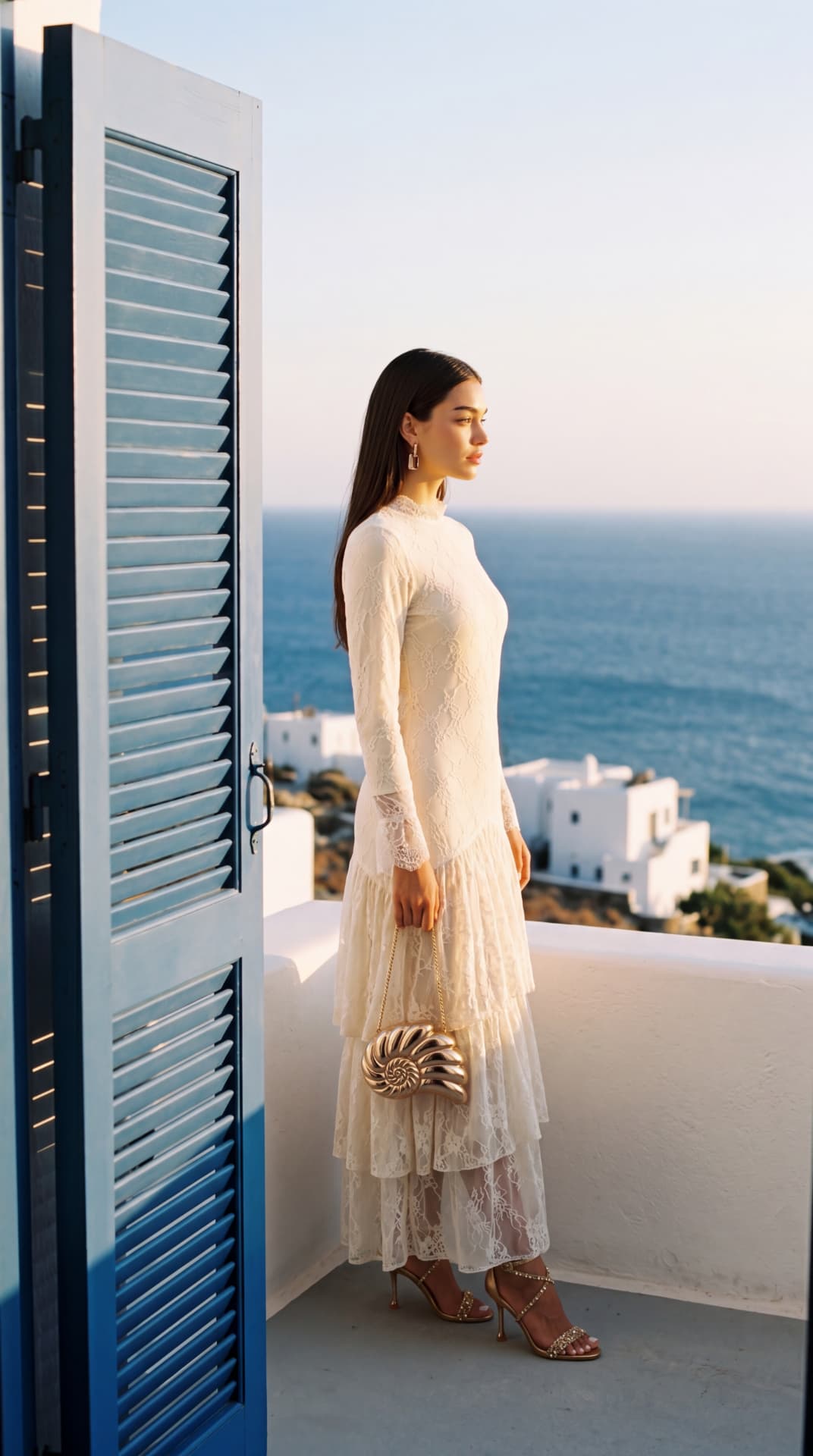
MODULA interpretation: these four markets punish the loudest version of a campaign and reward the quietest. The same collection usually needs lower-contrast styling, calmer locations and more fabric-led detail imagery than a Dubai cut of the same shoot.
Consumer insights
- Purchase decisions are more social and family-mediated than in the UAE, where a large expatriate population buys individually.
- Occasion wear carries disproportionate weight: weddings, Eid and national celebrations drive a large share of premium spend.
- Word of mouth within small communities substitutes for mass advertising — a small number of well-placed relationships moves more volume than a broad campaign.
- Cross-border shopping into Dubai and, increasingly, Riyadh is normal; brands present in those hubs are already partially visible here.
Opportunities
- Low competitive density: fewer brands invest in market-specific content, so a localised campaign stands out at a fraction of the UAE cost.
- Kuwait's designer culture makes it a credibility market — recognition there travels across the Gulf.
- Qatar's occasion economy suits limited, high-margin capsule production rather than broad ranges.
- Digital-first entry is viable: physical retail economics rarely justify a store before demand is proven in these populations.
Risks
- Data scarcity: country-level fashion figures are thin and often modelled rather than measured. Plan with ranges, not point estimates.
- Small absolute ceilings: no single one of these markets sustains a large business alone; they work as a portfolio alongside the UAE or Saudi Arabia.
- Reputational concentration: in small markets a single tone-deaf campaign is remembered for years.
Forecast
Mordor's Qatar trajectory (USD 1.47bn in 2025 to USD 1.62bn in 2026) is representative of the pattern across these markets: steady mid-to-high single-digit growth rather than the step-changes seen in Saudi Arabia. The realistic strategy is incremental share capture using content already produced for the larger Gulf markets, re-cut and re-styled per country — not separate campaigns from scratch.
- Are Qatar, Kuwait, Bahrain and Oman worth targeting separately?
- Not with separate full productions. They are worth targeting with separate cuts of the same production — different styling, casting and location selects — because the incremental cost is low and the competitive noise is far lower than in Dubai.
- Which of the four is the best entry point?
- It depends on the product. Qatar suits couture and occasion pieces, Kuwait suits design-led labels seeking credibility, Bahrain suits contemporary premium with Saudi spillover, and Oman suits heritage and craft narratives.
- How reliable is the market data for these countries?
- Less reliable than for the UAE and Saudi Arabia. Most published figures come from commercial research houses using modelled estimates, and definitions vary. Treat them as directional.
Sources
- Mordor Intelligence, Qatar Luxury Goods Market — base-year (2025) market size USD 1.47bn, 2026 estimate USD 1.62bn.
- Redseer Strategy Consulting, “GCC Fashion Market Outlook”, April 2025 — GCC fashion retail valued at ≈ USD 85bn, forecast ≈ USD 127bn by 2030 at ≈ 7% CAGR; UAE and Saudi Arabia together ≈ 80% of the market.
- Ken Research, “GCC Luxury Fashion Boutiques Retail Market”, March 2026 — boutique-channel luxury fashion USD 7,768mn (2019) to USD 13,500mn (2025), ≈ 9.6% CAGR, with growth concentrated in the UAE; UAE recorded the world's highest net inflow of high-net-worth individuals in 2024 (≈ 6,700).
- Chalhoub Group, “GCC Personal Luxury 2024: Unstoppable”, May 2025 — GCC personal luxury retail sales USD 12.8bn in 2024, +6% YoY against an estimated -2% globally; Q1 2025 luxury fashion +11%, prestige beauty +23%.
Working with MODULA
If you are already producing for Dubai or Riyadh, the smaller Gulf markets are the cheapest incremental reach available — provided the content is re-cut rather than reposted.
MODULA is an Israel-based AI fashion production studio specialising in premium and modest fashion. We combine luxury fashion strategy, creative direction, visual branding and AI-assisted campaign production, and we build separate visual systems per market rather than one Gulf-wide template. Talk to us on WhatsApp for a production plan built around your collection and your target country.
מאמרים קשורים
The GCC Luxury Fashion Opportunity 2026: Market Size, Country Analysis, Consumer Behaviour and Strategic Entry Paths
A MODULA Intelligence Report for fashion CEOs, founders, investors and creative directors: how the Gulf became the world's most resilient luxury market, what the published data does and does not prove, and how international and modest-fashion brands should enter it in 2026.
English GuidesThe UAE Luxury Fashion Consumer Report 2026: Market Size, Consumer Segments and What Brands Get Wrong in Dubai
A MODULA Intelligence Report on the United Arab Emirates: how a market of roughly ten million residents became one of the most concentrated luxury fashion economies on earth, who is actually buying, and what international brands consistently misread about Dubai and Abu Dhabi.
English GuidesThe Saudi Fashion Industry Report 2026: Market Size, Vision 2030 Policy, Consumer Shift and Entry Strategy
A MODULA Intelligence Report on Saudi Arabia: the largest fashion market in the Gulf, the state programmes reshaping it, the conflicting published market sizes and what they mean, and how brands should approach a market that is young, digital and rapidly re-defining modest luxury.