The Ultimate Guide to Fashion Styling for Clothing Brands (2026)
A complete, practical styling system for fashion brands: identity, audience, colour harmony, layering, fabric pairing, accessories, modest and luxury styling, e-commerce and campaign rules, common mistakes, AI styling tools and 2026 trends.
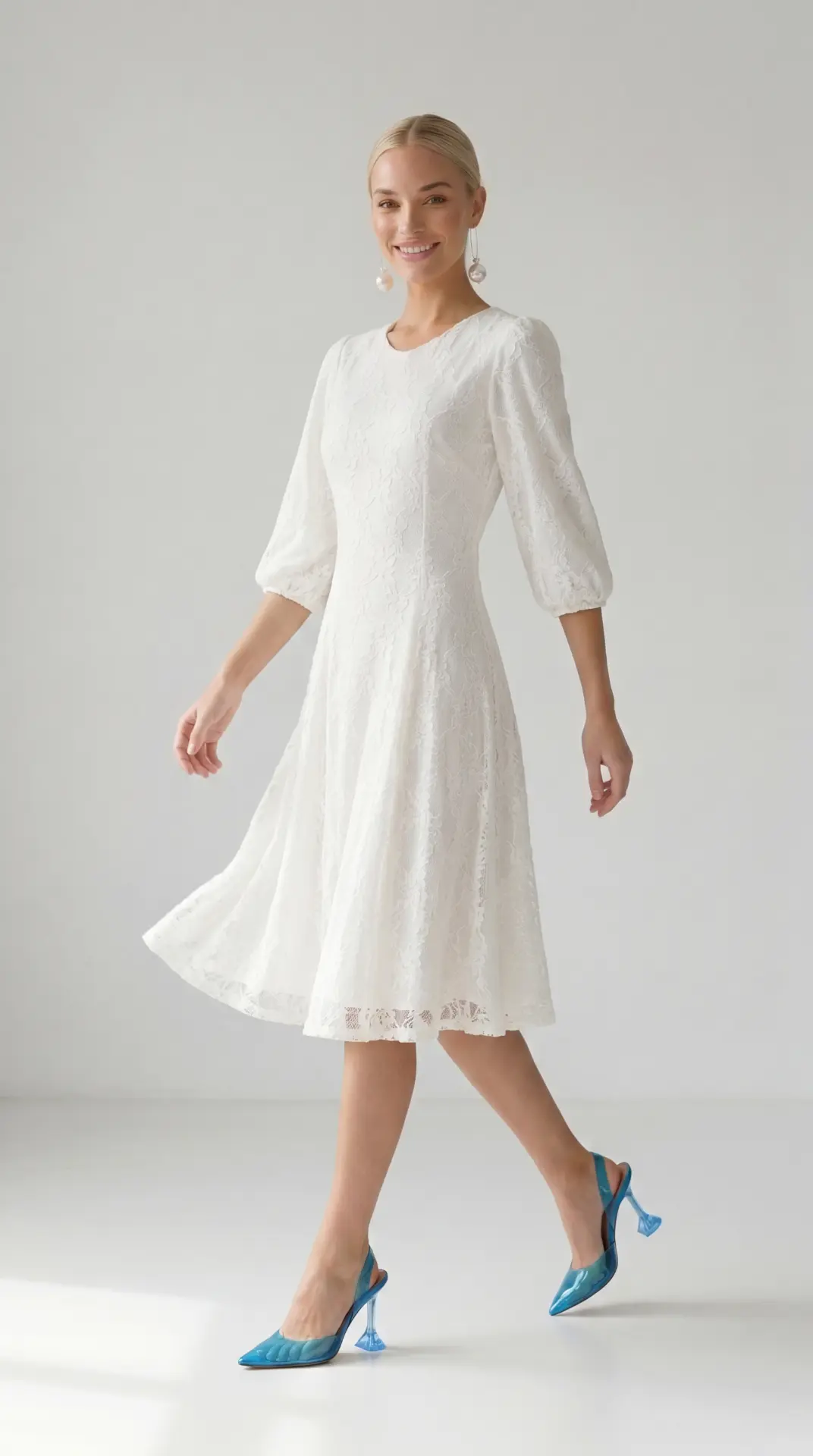
Executive summary
Styling is the difference between a garment and a product. Two brands can manufacture the same silk shirt in the same factory; the one that styles it with intent will sell it at a higher price, to a clearer customer, with a lower return rate. Styling is not decoration — it is the commercial translation layer between design and desire.
This guide sets out a repeatable styling system for clothing brands in 2026: how to define a styling identity, how to style for a specific customer rather than for a mood, how luxury styling differs structurally from commercial styling, and how to apply colour, layering, fabric, accessories and footwear as deliberate tools rather than instinct. It closes with the styling rules that change for e-commerce versus campaign work, the mistakes that quietly cost brands revenue, and where AI-assisted styling genuinely helps.
Key takeaways
- Styling sells because it removes imagination work: the customer sees the outcome, not the item.
- A styling identity is defined by constraints — a fixed palette, silhouette logic, fabric hierarchy and accessory grammar — not by variety.
- Luxury styling reduces; commercial styling clarifies. Copying luxury styling on a commercial catalogue lowers conversion.
- E-commerce styling optimises for comprehension and fit confidence. Campaign styling optimises for memory and desire. They are different disciplines.
- Consistency across product page, lookbook, campaign and social is worth more than any single beautiful image.
- AI production makes styling more valuable, not less: the styling brief becomes the creative asset that scales.
Table of contents
- 1. What is fashion styling?
- 2. Why styling sells more than beautiful clothes
- 3. Building a recognisable fashion identity
- 4. Styling according to target audience
- 5. Luxury styling vs commercial styling
- 6. Colour harmony
- 7. Layering techniques
- 8. Fabric combinations
- 9. Accessories, shoes, bags and jewellery
- 10. Styling for modest fashion
- 11. Styling for luxury brands
- 12. Styling for e-commerce
- 13. Styling for campaigns
- 14. Styling mistakes that cost money
- 15. Case studies
- 16. AI tools for styling
- 17. Future styling trends
- 18. Methodology, FAQ and sources
1. What is fashion styling?
Fashion styling is the practice of assembling garments, accessories, proportion, colour and context into a complete, intentional look that communicates a specific idea to a specific person. It operates on four layers at once: the garment layer (what is worn), the proportion layer (how it sits on the body), the context layer (where and how it is shown), and the meaning layer (what the viewer concludes about themselves if they wear it).
Professional styling is often confused with three adjacent roles. A designer decides what exists. A stylist decides what it means in combination. An art director decides how the whole world around it looks. A visual merchandiser decides how it is encountered in physical or digital retail. Brands that collapse these roles into one person usually produce visually pleasant but commercially vague imagery.
| Role | Owns | Typical failure when missing |
|---|---|---|
| Designer | Garment, fabric, fit, collection logic | Beautiful concept with no wearable story |
| Stylist | Looks, proportion, accessories, styling continuity | Products photographed as isolated objects; low desire |
| Art director | Palette, location, mood, casting, campaign narrative | Inconsistent visual language across channels |
| Photographer / AI producer | Light, framing, texture rendering, output quality | Flat imagery that hides fabric quality |
| Visual merchandiser | In-store or on-site sequencing of looks | High traffic, low basket size |
2. Why styling sells more than beautiful clothes
Buying clothing online is a prediction task. The customer is not asking 'is this nice?' but 'will this work for me, in my life, with what I already own?'. Every unanswered question in that prediction adds friction, and friction is measurable: it shows up as low add-to-cart rates, abandoned carts, and returns attributed to 'not as expected'.
Styling answers those questions before they are asked. A dress shown with a defined belt, a specific shoe and one clear accessory tells the customer the occasion, the proportion, the formality level and the styling effort required. Retail research consistently links richer, more contextual product imagery with higher conversion and fewer returns, because expectation and delivery align more closely (Baymard Institute usability research on e-commerce product pages).
- Styling shortens the decision: the customer evaluates an outcome, not raw material.
- Styling raises perceived value: identical garments photographed with intentional proportion read as more expensive.
- Styling increases basket size: a complete look suggests two to four items instead of one.
- Styling reduces returns: accurate context sets accurate expectations about length, volume and formality.
- Styling builds recall: a consistent styling signature is remembered even when individual products are not.
Customers do not buy garments. They buy the version of themselves that the styling implies.
3. Building a recognisable fashion identity
A styling identity is a set of constraints you refuse to break. Most emerging brands do the opposite: they style each drop according to whatever is trending, and after two years they have a large image library and no recognisable signature. Recognition comes from repetition of a small number of decisions.
The five constraints that create a signature
- Palette discipline — a core of three to five colours plus one seasonal accent, applied across garments, props and backgrounds.
- Silhouette logic — a repeated proportional relationship (for example: volume on top, narrow below; or full-length column with defined waist).
- Fabric hierarchy — which materials lead (matte crepe, heavy satin, fine wool) and which only support.
- Accessory grammar — a fixed vocabulary: one statement piece per look, or metals never mixed, or shoes always tonal.
- Framing and posture — how the body is shown: full-length and static, three-quarter and in motion, or close and tactile.
| Dimension | Your decision | Example (premium modest label) |
|---|---|---|
| Core palette | 3–5 colours | Ivory, black, sand, deep olive, burgundy accent |
| Accent rule | When accents appear | One accent look per eight, always in outerwear |
| Silhouette | Repeated proportion | Column dress, defined waist, floor-grazing hem |
| Fabric lead | Hero material | Matte crepe and heavy viscose; satin as accent only |
| Accessories | Grammar | One piece of gold jewellery, no mixed metals, tonal shoe |
| Hair & beauty | Fixed direction | Clean centre part, skin-first makeup, no strong lip |
| Framing | Standard crop | Full length hero, one detail crop, one movement frame |
4. Styling according to target audience
Styling for 'women 25–45' is not styling. Useful audience definitions describe occasions, environments and constraints, because those determine proportion, fabric and formality. The practical method is to write three customer scenarios and style directly against them.
| Customer scenario | What they need to see | Styling decisions |
|---|---|---|
| Professional buying workwear | Fit under a jacket, non-transparency, ease of movement | Layered with structured outerwear, closed shoe, minimal jewellery, standing posture |
| Occasion buyer, evening event | Drama, fabric behaviour, how it moves | Movement frames, heel, statement earring, richer light |
| Everyday premium buyer | Comfort with elevation, how it works twice | Two styling variations of one dress: flat shoe day look, heel evening look |
| Modest occasion buyer | Coverage confidence, opacity, sleeve and hem length | Full-length frames, arms visible in motion, layering piece shown attached |
| Gift buyer | Instant desirability, clear sizing cues | Clean hero shot, single styled look, no ambiguity |
A useful test: if two of your scenarios would be styled identically, one of them is not a real segment.
5. Luxury styling vs commercial styling
These are not quality tiers, they are different objectives. Luxury styling protects mystique and margin; it withholds information deliberately so the object retains aura. Commercial styling maximises comprehension; it gives the customer everything needed to buy quickly. Most brand damage happens when the two are mixed without intent — a mid-market catalogue styled with luxury opacity loses conversion, and a luxury campaign styled with catalogue clarity loses price authority.
| Dimension | Luxury styling | Commercial styling |
|---|---|---|
| Objective | Desire, aura, price justification | Comprehension, speed, conversion |
| Information density | Low — one idea per image | High — fit, fabric, scale, variation |
| Colour | Restrained, often tonal | Broader, product-led |
| Accessories | Sparse or extreme, never neutral | Practical, relatable, everyday |
| Model direction | Distance, stillness, attitude | Warmth, approachability, movement |
| Backgrounds | Architectural, empty, textured | Clean, consistent, repeatable |
| Volume of assets | Few, highly finished | Many, systematised |
| Success metric | Brand equity, press, price hold | Conversion rate, return rate, AOV |
The workable answer for most premium brands is a two-tier system: a small number of luxury-styled campaign images that set the brand ceiling, and a large, disciplined library of commercially styled assets that do the selling. The two tiers must share palette, silhouette logic and accessory grammar so they read as one brand.
6. Colour harmony
Colour is the fastest-read signal in any image, processed before shape or detail. Styling colour well is less about theory and more about deciding which of four relationships you are using — and then holding it across the whole look, including skin, hair, props and background.
| Strategy | How it works | Best for | Risk |
|---|---|---|---|
| Tonal / monochrome | One hue, varied value and texture | Luxury, modest column silhouettes, elongation | Flatness if textures are not varied |
| Analogous | Neighbouring hues (sand, camel, rust) | Warm premium editorial, autumn drops | Muddiness under warm light |
| Complementary accent | Neutral base, one opposing accent | Campaigns needing a focal point | Accent competing with the product |
| High-contrast neutral | Black, ivory, deep brown blocks | Timeless brand imagery, evergreen assets | Reads cold without fabric texture |
Practical colour rules for production
- Decide the background before the look; backgrounds are a colour in the styling, not scenery.
- Keep three values in a tonal look — light, mid and deep — or the image collapses visually.
- Never place an accent colour on both the accessory and the shoe; the eye splits and the look loses its focus.
- Check colour under the actual light you will shoot in. Warm light shifts ivory to cream and grey to lavender.
- For e-commerce, prioritise colour fidelity over mood: a wrong colour is the most expensive styling error in returns.
7. Layering techniques
Layering is proportion management. It exists to control the line of the body, to add depth and texture, and — commercially — to attach a second and third product to the look. Good layering is legible: the viewer can identify every layer without effort.
The four working layers
- Base layer — the closest to the body; defines silhouette and coverage (slip dress, fine knit, body).
- Structure layer — the piece that creates shape (shirt dress, blazer, tailored waistcoat).
- Volume layer — the piece that adds movement and drama (coat, cape, oversized cardigan, long vest).
- Definition layer — the piece that resolves the silhouette (belt, tie, obi, cinched sleeve).
The most common failure is stacking two volume layers with no definition layer, which turns a considered look into bulk. The second most common failure is layering pieces of near-identical length, which erases the line. Vary hems by at least 8–12 cm so each layer registers separately.
| Recipe | Layers | Effect |
|---|---|---|
| Column with weight | Maxi dress + long open coat + slim belt | Elongates, adds luxury weight, reads modest and premium |
| Soft tailoring | Fine knit + tailored waistcoat + wide trouser | Professional, contemporary, strong for workwear drops |
| Texture stack | Satin base + heavy knit + leather accessory | Tactile, sells fabric quality in close crops |
| Modest layering | Long-sleeve base + sleeveless overdress + scarf | Coverage without bulk; attaches three SKUs to one look |
8. Fabric combinations
Fabric pairing decides how a look photographs. Cameras and AI rendering both read texture as luminance: matte materials absorb light and recede, shine reflects and advances. A look built from a single reflectance level looks cheap regardless of the actual material cost.
| Pair | Result | Use it for | Watch out for |
|---|---|---|---|
| Matte crepe + satin | Controlled luxury contrast | Occasion and evening drops | Satin blowing out under hard light |
| Wool + silk | Classic tension of weight and fluidity | Premium tailoring | Static cling on the silk layer |
| Linen + cotton poplin | Relaxed, honest, daylight-friendly | Resort and summer capsules | Creasing reading as sloppiness |
| Knit + leather | Tactile, editorial, high depth | Autumn campaigns | Both absorbing light; add one reflective accessory |
| Chiffon + heavy jersey | Movement over structure | Motion frames, video, modest layering | Transparency issues; always test opacity on camera |
A reliable rule for premium imagery: every look should contain at least one matte surface, one surface with visible weave or structure, and one point of reflectance — even if the reflectance is only a metal fastening or a polished shoe.
9. Accessories, shoes, bags and jewellery
Accessories are the fastest way to signal price tier, occasion and identity — and the fastest way to destroy a look. The discipline is subtractive: style the full look, then remove until only intentional pieces remain.
Jewellery
- One focal point per look: statement earrings or a statement neckline piece, not both.
- Match metal to palette temperature: gold with warm, sand and ivory palettes; silver with cool greys, black and blue.
- Scale jewellery to neckline: high necklines take earrings; open necklines take chains.
- For close-up crops, jewellery is the product's supporting cast — keep it clean enough not to compete in the frame.
Shoes
- Tonal shoes lengthen the line and are the safest default for full-length luxury imagery.
- Contrast shoes create a stop at the ankle — use only when you want the eye to land there.
- Shoe formality must match hem formality; a casual shoe under an occasion hem reads as an error rather than a statement, unless repeated deliberately across the collection.
- For modest column silhouettes, choose a shoe visible only in motion frames; the hem should not be shortened to display footwear.
Bags
- Bag scale sets perceived body scale. Oversized bags shrink the frame; micro bags exaggerate volume.
- In campaign work the bag is a compositional weight — use it to balance an asymmetric silhouette.
- In e-commerce, only include a bag when it is purchasable or clearly branded as styling, to avoid support tickets.
Belts, scarves and headwear
The definition layer is where most brands under-invest. A well-placed belt or tie changes a garment from 'fabric on a body' to 'a designed silhouette' — and photographs as intent. For modest and occasion styling, a scarf or headpiece also functions as a colour bridge between the palette and the skin tone.
10. Styling for modest fashion
Modest styling is a design language, not a limitation. Its rules are additive: coverage is a given, so interest must come from proportion, texture, layering and detail. The brands that treat modesty apologetically produce flat imagery; the ones that treat it as a discipline produce some of the most elegant work in the industry.
- Proportion carries the look: define a waist, or commit fully to a column. Ambiguous mid-volume reads as shapeless.
- Show length honestly. Full-length frames build coverage confidence and reduce returns dramatically in this segment.
- Prove opacity. A backlit or bright-light frame answers the single most common pre-purchase question.
- Style sleeves. A cuff, a gathered shoulder or a bell sleeve is often the strongest design signal in a modest look.
- Show movement. Coverage plus stillness reads heavy; coverage plus motion reads luxurious.
- Layer with intent rather than for compliance — an overdress or long vest should look like a design decision, not a cover-up.
MODULA works with premium modest labels across Israel, Europe and the Gulf, and the pattern is consistent: modest collections perform best when styled at full luxury standard rather than styled defensively.
11. Styling for luxury brands
Luxury styling has a specific grammar. It is quiet, it is deliberate, and it protects space. Practically, that means fewer elements, longer sightlines, and no styling gesture without a reason.
| Do | Do not |
|---|---|
| Reduce to one idea per image | Show three trends in one look |
| Use architecture and negative space | Fill the frame with props |
| Repeat the same styling signature all season | Restyle the brand every drop |
| Let fabric behaviour be the drama | Add movement artificially with wind and confetti |
| Style hands, posture and gaze deliberately | Leave posture to chance |
| Hold the palette even in social content | Treat social as a separate visual brand |
12. Styling for e-commerce
E-commerce styling is an information design problem. The customer needs to answer five questions in under ten seconds: what is it, how does it fit, what is the fabric, how long is it, and what does it go with. Every image in the product-page sequence should answer one of those.
| # | Frame | Job |
|---|---|---|
| 1 | Full-length hero, styled, front | Identify the product and set the styling standard |
| 2 | Full-length back or three-quarter | Show construction and rear detail |
| 3 | Detail crop — fabric, seam, cuff | Prove quality and texture |
| 4 | Movement frame | Show drape and behaviour |
| 5 | Styled variation (second look) | Attach a second product; show versatility |
| 6 | Scale / fit reference | Reduce returns caused by length and volume surprises |
- Keep background, light and crop identical across every product in a category — inconsistency reads as unprofessional and slows browsing.
- Colour accuracy outranks mood. Photograph or render the true colour, then apply mood in campaign assets only.
- Never crop the hem on a long garment. Length ambiguity is a leading driver of returns in dresses and skirts.
- Give every image a descriptive alt text that names the garment, colour and styling — it is both accessibility and image SEO.
13. Styling for campaigns
Campaign styling is memory work. Its job is to leave one image in the customer's mind that still means something a month later. That requires a single controlling idea, a location or set that is part of the story rather than a backdrop, and a styling signature repeated across every frame.
- Write the campaign idea in one sentence before styling anything. If it needs a paragraph, it will not survive as an image.
- Style the hero look first, then build the rest of the campaign as variations of it.
- Choose one non-negotiable repeating element — a colour, a gesture, a texture, a light quality.
- Plan crops in advance: every campaign now needs 9:16 vertical, 4:5 feed and 16:9 banner variants of the same look.
- Design one detail frame per look — detail crops carry disproportionate weight in social and in Google Images.
Campaign styling is covered in depth, including art direction, moodboards and production workflow, in our companion guide on editorial and luxury campaign styling.
14. Styling mistakes that cost money
| Mistake | What it costs |
|---|---|
| Styling every drop in a different visual language | No brand recall; every campaign starts from zero |
| Hiding length or fit to look editorial | Higher return rate on dresses and outerwear |
| Over-accessorising the product page | Attention split; the product becomes secondary |
| Mixed metals with no rule | Look reads accidental; perceived price drops |
| Single-reflectance looks (all matte or all shine) | Flat imagery; fabric quality invisible |
| Two volume layers, no definition layer | Silhouette lost; garment appears shapeless |
| Trend-chasing accessories that date fast | Asset library expires within one season |
| Inconsistent crop and background across a category | Slower browsing, lower category conversion |
| Colour shifted for mood on product pages | Returns for 'colour not as shown' |
| No movement frames | Drape and fabric quality never demonstrated |
15. Case studies
Case study A — a premium modest label rebuilding its product pages
A modest occasion-wear label had strong garments and weak imagery: three-quarter crops, mixed backgrounds, no movement. Styling was restructured around a fixed six-frame sequence with full-length heroes, one opacity-proving frame and one motion frame per style, plus a locked palette of ivory, black and sand. The visible result was immediate: a consistent grid, a clear price signal, and a product page that answered coverage questions without a single line of copy.
Case study B — a contemporary brand separating campaign from catalogue
A contemporary label was using its campaign imagery as product imagery, with heavy grade and atmospheric light. Conversion was low and colour-related returns high. Splitting into two tiers — a small luxury-styled campaign set and a clean, colour-accurate catalogue set sharing the same palette and accessory grammar — kept the brand ceiling intact while giving the store the clarity it needed.
Case study C — scaling styling with AI production
A brand releasing capsule drops every three weeks could not sustain classic campaign production at that pace. The styling identity was documented once — palette, silhouette logic, fabric hierarchy, accessory grammar, framing standards — and then used as the production brief for AI-generated campaign and lookbook imagery, with hero product frames still shot conventionally. The hybrid model preserved fabric truth where it matters and multiplied campaign output where speed matters.
16. AI tools for styling
AI has changed the economics of visual production, not the discipline of styling. The styling brief — palette, silhouette, layering, accessories, framing — is exactly what an AI production pipeline consumes. Brands with a documented styling identity get dramatically better AI output than brands without one, because the model has a specification to follow instead of a vague aesthetic.
| Task | AI today | Recommendation |
|---|---|---|
| Campaign and lookbook imagery | Strong | Use AI, direct it with a written styling brief |
| Location and mood variation | Very strong | Generate the same look across seasons and markets |
| Colour and palette exploration | Strong | Test palettes before committing to production |
| Fine fabric detail, embroidery, lace close-ups | Improving but inconsistent | Shoot detail crops conventionally |
| True colour for product pages | Unreliable as a source of truth | Photograph the garment; use AI for context |
| Fit and size representation | Limited | Use real fit imagery and measurements |
| Motion and drape video | Rapidly improving | Useful for social; verify fabric behaviour |
This hybrid model — real capture where fabric truth is commercially critical, AI production for context, campaigns and volume — is the workflow MODULA builds for fashion brands as an AI fashion production studio based in Israel, combining professional styling, fashion direction, AI technology and international market knowledge.
17. Future styling trends
- Styling systems over styling moments — brands documenting a styling standard the way they document brand colours.
- Vertical-first styling — looks composed for 9:16 from the outset, with the styling focal point in the upper third.
- Texture as luxury signal — as AI imagery becomes ubiquitous, tactile realism becomes the differentiator.
- Modest luxury entering mainstream campaigns rather than being segmented into seasonal edits.
- Multi-market styling — one collection rendered with market-appropriate styling for the Gulf, Europe and North America.
- Provenance and honesty — clear labelling of AI-assisted imagery alongside real fit photography as a trust signal.
- Longer asset lifecycles — palette-disciplined imagery reused across two to three seasons instead of being replaced.
18. Methodology
This guide is based on MODULA's production practice with premium and modest fashion brands across Israel, Europe and the Gulf; on standard styling and art-direction practice used in editorial and commercial fashion production; and on published e-commerce usability and merchandising research on product imagery, expectation-setting and returns. Commercial claims are framed as directional patterns observed in production rather than as universal statistics, and no brand-specific figures are published without permission. Last updated: 4 August 2026.
- What is fashion styling in simple terms?
- Fashion styling is the deliberate assembly of garments, proportion, colour, accessories and context into a complete look that communicates a specific idea to a specific customer. It turns a product into an outcome the customer can imagine wearing.
- Why does styling increase sales?
- Styling removes prediction work. When a customer can see occasion, proportion, formality and how a piece combines with others, the decision is faster, the basket is larger, and returns fall because expectations match delivery.
- What is the difference between luxury styling and commercial styling?
- Luxury styling reduces information to protect desire and price positioning. Commercial styling maximises clarity to drive conversion. Most premium brands need both, in two separate tiers that share one palette and styling signature.
- How should modest fashion be styled?
- At full luxury standard. Use proportion, layering and texture for interest, show full length and prove opacity, style the sleeve as a design feature, and always include a movement frame so coverage reads as elegance rather than weight.
- How many images does a fashion product page need?
- Six is a reliable standard: styled full-length hero, back or three-quarter, fabric detail crop, movement frame, a second styled variation, and a scale or fit reference.
- Can AI replace a fashion stylist?
- No. AI replaces production constraints, not styling judgement. AI output quality depends directly on the quality of the styling brief, which is why brands with a documented styling identity get far better results.
- How do I build a recognisable styling identity?
- Fix five constraints and repeat them: core palette, silhouette logic, fabric hierarchy, accessory grammar and framing standard. Recognition comes from repetition, not variety.
Sources and further reading
- Baymard Institute — e-commerce product page and product image usability research.
- Business of Fashion & McKinsey — The State of Fashion annual reports on consumer behaviour and digital merchandising.
- DinarStandard / State of the Global Islamic Economy Report — modest fashion market sizing and growth.
- Nielsen Norman Group — visual perception, scanning behaviour and image comprehension online.
- Vogue Business — coverage of campaign production, art direction and AI adoption in fashion.
Work with MODULA
MODULA is an AI fashion production studio based in Israel, specialising in premium modest fashion and luxury visual production. We combine professional styling, fashion direction, AI technology and international market knowledge to create premium campaigns, e-commerce imagery, lookbooks and branded visual content for fashion brands worldwide. If you want a documented styling identity and a production system that can scale it, talk to us about your next collection.
מאמרים קשורים
Visual Merchandising for Fashion Stores: How Boutique Design and Store Layout Increase Sales
How boutique layout, window displays, lighting, colour psychology, mannequin styling and display hierarchy change what customers buy — with a full store audit checklist, omnichannel guidance and smart-retail trends for 2026.
English GuidesFashion Styling for Editorials, Campaigns and Luxury Fashion Productions
How professional fashion campaigns are actually built: planning, art direction, moodboards, storytelling, model and beauty coordination, colour palettes, fabric movement, location and studio decisions, AI production workflow, lookbook and e-commerce styling, plus a full luxury campaign checklist.
מדריכיםמדריך: איך לבנות שפה ויזואלית עקבית למותג אופנה ב-2026
מותגי אופנה מצליחים בונים שפה ויזואלית שמזוהה בשנייה. מדריך מקצועי לבניית moodboard, פלטת צבעים, טיפוגרפיה ואווירת צילום שעובדת לאורך שנים.