Fashion Styling for Editorials, Campaigns and Luxury Fashion Productions
How professional fashion campaigns are actually built: planning, art direction, moodboards, storytelling, model and beauty coordination, colour palettes, fabric movement, location and studio decisions, AI production workflow, lookbook and e-commerce styling, plus a full luxury campaign checklist.
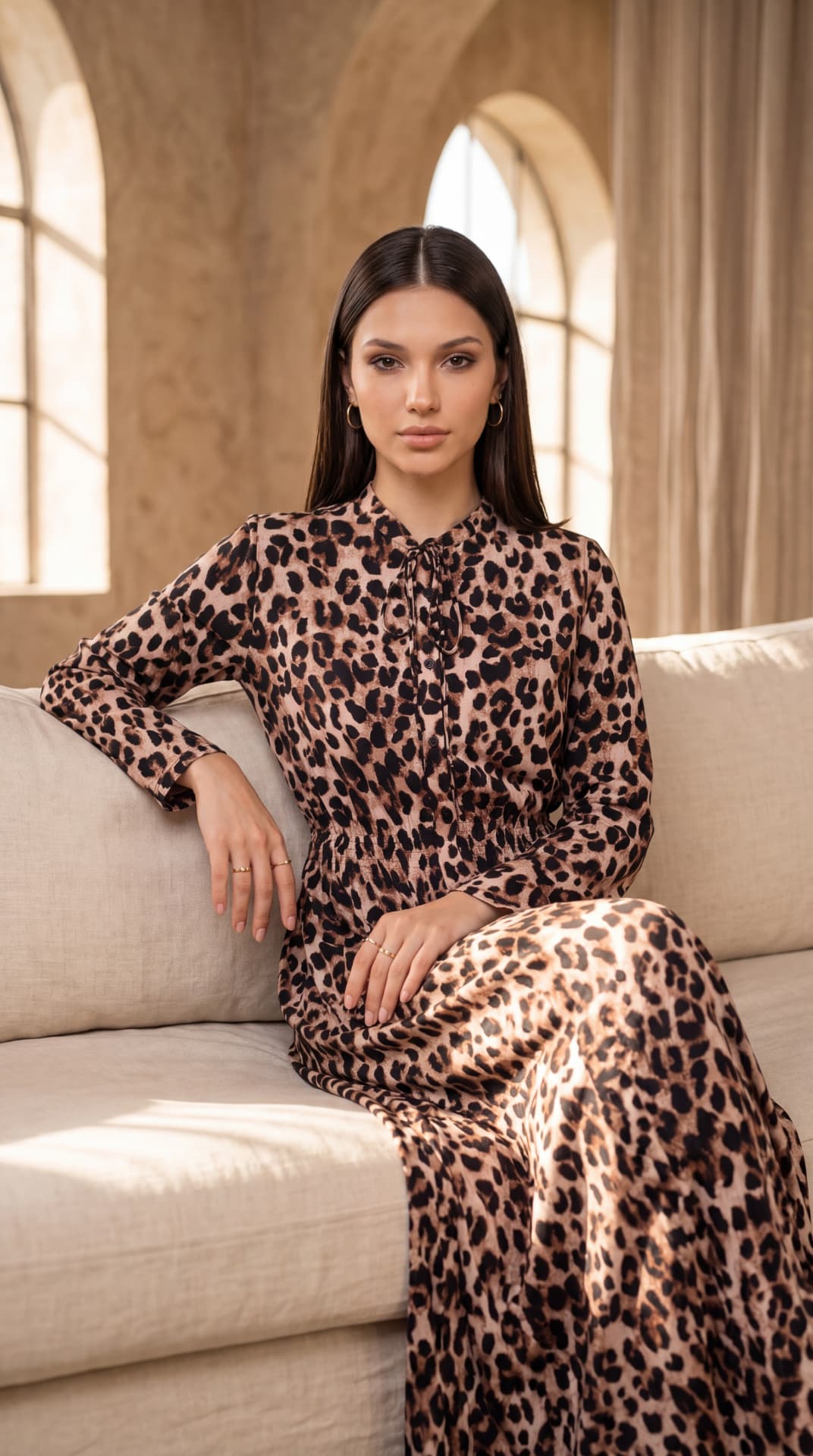
MODULA — an AI fashion photography and visual production agency.
Executive summary
A fashion campaign is not a photoshoot with better clothes. It is a controlled production in which every decision — casting, palette, location, fabric, hair, posture, crop — serves one idea that the brand wants remembered. Editorial styling is where that idea becomes visible.
This guide documents the full workflow used in professional campaign production, from the first brief through art direction, moodboards and styling execution to delivery, and shows how the same workflow applies to AI fashion productions, lookbooks and e-commerce sets. It is written for creative directors, brand managers, stylists and fashion founders who need campaigns that hold together across every channel.
Key takeaways
- Every campaign needs one controlling idea, expressible in a single sentence, before any styling begins.
- The moodboard is a contract, not inspiration: it fixes palette, light, posture, texture and crop for everyone involved.
- Consistency is created by repetition of a small number of elements across every frame.
- Fabric movement is what separates campaign imagery from catalogue imagery — plan for it deliberately.
- Studio gives control and repeatability; location gives narrative and scale. Choose by objective, not by budget alone.
- AI productions need more styling direction than classic shoots, not less — the brief is the production.
- Plan crops and aspect ratios during styling, not in post.
Table of contents
- 1. Fashion campaign planning
- 2. Art direction
- 3. Moodboards
- 4. Storytelling
- 5. Styling according to brand identity
- 6. Styling for luxury campaigns
- 7. Styling for modest fashion productions
- 8. Model styling and casting
- 9. Hair and makeup coordination
- 10. Colour palettes
- 11. Fabric movement
- 12. Location styling
- 13. Studio vs outdoor productions
- 14. Styling for AI fashion productions
- 15. Campaign consistency
- 16. Lookbook styling
- 17. E-commerce styling
- 18. Seasonal campaigns
- 19. Luxury campaign checklist and behind-the-scenes workflow
- 20. Common styling mistakes, methodology, FAQ and sources
1. Fashion campaign planning
Planning determines eighty per cent of the final quality. Every professional campaign begins with four documents: the brief, the shot list, the styling plan and the schedule. Without them, production time is spent making decisions that should have been made in advance.
| Phase | Timing | Output |
|---|---|---|
| Brief and objective | Week −6 | One-sentence idea, audience, channels, success metric |
| Concept and references | Week −5 | Direction options, initial palette |
| Moodboard lock | Week −4 | Approved visual contract |
| Casting, location, crew | Week −3 | Confirmed talent, location or set, schedule |
| Styling pull and fitting | Week −2 | Looks defined, fitted, photographed on a stand |
| Shot list and crops | Week −1 | Frame-by-frame plan with aspect ratios |
| Production | Week 0 | Capture or AI generation |
| Selection and post | Week +1 | Edit, grade, retouch, format exports |
| Rollout | Week +2 | Site, e-commerce, social, in-store, press |
- Define the success metric before the concept — brand awareness, product launch sell-through, market entry and press coverage lead to different styling.
- Decide the channel mix first; a campaign that lives mainly in 9:16 must be styled and framed vertically from the start.
- Budget for one detail frame and one movement frame per look; these are the assets that get reused most.
2. Art direction
Art direction owns the world; styling owns the body. In practice the two must be decided together, because location, light and palette determine which fabrics and colours will survive the frame.
- Light quality — hard directional light for graphic, architectural campaigns; soft diffused light for tactile, intimate ones.
- Palette range — the environment colour is part of the styling palette and must be chosen with it.
- Camera distance and framing — full-length, three-quarter or close; this decides how much styling detail is even visible.
- Posture and gaze — direct address reads confident and commercial; averted gaze reads editorial and distant.
- Rhythm across the set — the sequence of wide, medium and detail frames determines whether the campaign feels composed.
3. Moodboards
A moodboard is a production document. Its job is to eliminate ambiguity, which means it must be organised by decision rather than by mood.
| Section | Contents | Prevents |
|---|---|---|
| Idea | One sentence plus three keywords | Concept drift mid-production |
| Palette | Exact colour swatches including background and skin tone context | Colour clashes discovered on set |
| Light | Two or three reference images of light quality only | Wrong light for the fabric |
| Silhouette | Proportion references, not outfit copies | Looks that fight the collection |
| Texture | Fabric close-ups | Flat rendering of premium materials |
| Posture & gesture | Body language references | Awkward or generic posing |
| Hair & beauty | Direction with a clear 'not this' | Beauty overpowering the clothes |
| Framing & crops | Aspect ratios required for delivery | Missing verticals at rollout |
Include an explicit exclusion list. 'Not this' references save more production time than inspiration does.
4. Storytelling
The strongest campaigns imply a narrative without explaining it: a moment before or after something, a place with history, a repeated gesture. Styling supports narrative through continuity — the same coat carried through three frames, the same shoe in every look, a scarf that reappears.
- Anchor the story in a place, a time of day or a ritual rather than an abstract emotion.
- Give the subject something to do — arriving, waiting, leaving, working. Action produces natural posture.
- Use continuity objects across frames to bind the set together.
- Keep the narrative implicit; over-literal storytelling ages fast and travels poorly across markets.
5. Styling according to brand identity
A campaign should be recognisable as the brand before the logo is visible. Bring the documented styling identity — palette, silhouette logic, fabric hierarchy, accessory grammar, framing standard — into the campaign as constraints, and let the campaign idea vary only within them.
| Fixed across campaigns | Variable per campaign |
|---|---|
| Core palette and accessory grammar | Seasonal accent colour |
| Silhouette logic and proportion | Location and set |
| Framing standards and crop set | Narrative and casting mood |
| Beauty direction (skin-first, hair discipline) | Light quality and grade |
| Level of information density | Number of looks and shot count |
6. Styling for luxury campaigns
- One idea per frame. Remove every element that is not carrying the idea.
- Protect negative space; luxury reads as room around the subject.
- Let fabric behaviour be the drama rather than props or effects.
- Style posture and hands as carefully as the garment — they carry most of the perceived attitude.
- Keep accessories either sparse or deliberately extreme; neutral accessories dilute a luxury frame.
- Grade conservatively. Heavy colour grading reads as compensation for weak styling.
7. Styling for modest fashion productions
Modest campaign styling has to achieve two things at once: full coverage and full desirability. The mistake is to treat coverage as the subject. The subject is always the design.
- Build drama with movement and fabric weight rather than skin — walking, turning and wind frames carry the campaign.
- Style the sleeve, the cuff and the hem as focal design features.
- Choose locations with vertical architecture; long silhouettes photograph best against long lines.
- Coordinate headwear as part of the palette, never as an afterthought.
- Prove opacity in at least one frame per look — it is a commercial requirement, not a technical detail.
- Cast and direct for confident, upright posture; coverage plus hesitant posture reads as modesty-as-limitation.
8. Model styling and casting
- Cast for proportion relative to the collection: a column silhouette and a volume silhouette suit different bodies and heights.
- Confirm sample fit before the shoot day; unfitted samples are the most common cause of lost production hours.
- Fit garments on the day with clips, pins and tape at the back of the body, and re-check between every frame.
- Direct posture explicitly — weight on the back foot, shoulders open, hands with intent. Posture is styling.
- Photograph each finished look on the stand or on set before shooting; a still reference reveals problems the eye misses live.
9. Hair and makeup coordination
Beauty must be decided as part of styling, not in parallel. The rule is hierarchy: if the collection is the statement, beauty is clean; if the collection is quiet, beauty can carry the mood.
| Campaign type | Hair | Makeup |
|---|---|---|
| Luxury minimal | Sleek, controlled, off the face | Skin-first, defined brow, no strong colour |
| Editorial statement | Sculpted or textured, part of the concept | Graphic accent, single focus |
| Modest occasion | Polished, or fully coordinated headwear | Luminous skin, refined eye, tonal lip |
| Commercial / e-commerce | Natural, consistent across the set | Neutral, repeatable, non-distracting |
- Match beauty temperature to the palette — cool beauty against a warm palette makes both look wrong.
- Keep hair off tailored shoulders and away from necklines when construction matters.
- Lock the beauty look at the fitting and photograph it; drift over a long day is the main cause of set inconsistency.
10. Colour palettes
A campaign palette includes five colour sources: the garments, the accessories, the environment, the skin and hair, and the light. Any of them can break the palette. Build the palette as a set of swatches covering all five and test it in a single frame before the full production.
| Palette | Composition | Reads as |
|---|---|---|
| Tonal ivory / sand | Warm neutrals, low contrast | Quiet luxury, timeless, modest-friendly |
| Black and architecture | Deep neutrals with grey concrete or stone | Urban, precise, contemporary |
| Earth and clay | Rust, olive, ochre, warm brown | Craft, texture, autumn |
| Ivory with one saturated accent | Neutral base, single strong colour | Product-led campaigns and launches |
| Monochrome deep | One dark hue in multiple textures | Occasion wear, evening, drama |
11. Fabric movement
Movement is the clearest evidence of fabric quality and the single most under-used tool in brand campaigns. It also produces the most reusable social assets.
- Match the movement to the fabric: chiffon and fine viscose float, crepe swings, heavy satin folds, wool holds.
- Direct real movement — walking, turning, sitting down — before resorting to wind machines.
- Shoot movement in bursts and select; one usable frame per ten is normal.
- Capture at least one movement frame per look, in vertical format, for social and product pages.
- In AI production, specify the movement explicitly in the brief; unspecified movement renders static and lifeless.
12. Location styling
- Choose locations with one strong characteristic — a colour, a texture, a line — not locations that are generically pretty.
- Test the palette against the location before committing; walls and floors are colour sources.
- Scout at the exact hour of the planned shoot; light direction changes the location entirely.
- Simplify the frame: remove or reposition anything that dates the image, such as signage or vehicles.
- Plan the wide establishing frame and the tight detail frame in the same setup to save production time.
13. Studio vs outdoor productions
| Factor | Studio | Location / outdoor |
|---|---|---|
| Control | Total | Partial; weather and light dependent |
| Repeatability | High — ideal for catalogue and category consistency | Low |
| Narrative | Limited without set build | Strong; place carries story |
| Cost profile | Predictable | Variable: permits, transport, contingency |
| Fabric rendering | Precisely controlled | Beautiful in the right hour, unforgiving otherwise |
| Best for | E-commerce, lookbooks, product truth | Brand campaigns, seasonal stories, scale |
Many premium brands now run a hybrid: studio capture for product-true frames, location or AI-generated environments for campaign context — keeping the same styling, palette and beauty direction across both so the sets merge into one visual language.
14. Styling for AI fashion productions
In an AI production the styling brief is the production. There is no set to improvise on, no stylist adjusting a hem between frames — every decision must be written before generation. Brands consistently underestimate this and then attribute weak output to the technology rather than the brief.
What an AI styling brief must specify
- Garment description in construction terms: neckline, sleeve, closure, hem length, fabric weight and drape.
- Exact palette, including background and any accent, with references.
- Silhouette and proportion, including where volume sits and where the waist is defined.
- Accessories with placement and metal temperature.
- Beauty direction, hair discipline and headwear coordination.
- Light quality, direction and time of day.
- Posture, gesture and gaze.
- Framing, camera distance and required aspect ratios.
- Movement instruction where the fabric should be shown in motion.
| Asset | Best production route | Why |
|---|---|---|
| Product-page hero and colour truth | Real capture | Colour accuracy and fit honesty reduce returns |
| Fabric and embroidery detail crops | Real capture | Fine texture rendering is still inconsistent in AI |
| Campaign and seasonal imagery | AI production | Speed, location freedom, cost per look |
| Lookbook context frames | AI production | Volume and consistency across a full collection |
| Market variations (Gulf, Europe, US) | AI production | Same collection, market-appropriate context |
| Social motion assets | Hybrid | Real drape where critical, AI for volume |
This is exactly how MODULA works as an AI fashion production studio based in Israel: professional styling and fashion direction first, then AI production, with real capture retained wherever fabric truth is commercially decisive.
15. Campaign consistency
- Define three non-negotiables per campaign — for example, one light quality, one accessory rule and one posture standard.
- Grade the whole set with a single treatment; per-image grading destroys cohesion.
- Keep crop logic consistent: the same distance for heroes, the same crop for details.
- Publish in sequence rather than at random; the order of release is part of the campaign.
- Audit the full set side by side before delivery — inconsistency is invisible image by image and obvious in a grid.
16. Lookbook styling
A lookbook has a different job from a campaign: it must present the whole collection legibly while retaining the brand's visual world. Its structure should follow the collection's internal logic — by story, by fabric family, or by occasion — and each look must be complete and purchasable.
- Keep light and background consistent throughout so garments can be compared.
- Style every look fully but simply; the collection is the subject, not the styling.
- Sequence for rhythm: alternate volumes and colour values so the pages do not flatten.
- Include one detail crop per three looks to carry fabric quality.
- Number looks and list components — buyers and press need to reference items quickly.
17. E-commerce styling
E-commerce sets are production work with strict standards: identical framing, identical light, accurate colour, and a fixed sequence per product. Campaign styling inspires; e-commerce styling must be repeatable a thousand times without drift.
- Lock a template: camera height, distance, background, light setup and crop, documented with reference frames.
- Style consistently across the category — the same shoe logic, the same jewellery scale, the same beauty.
- Shoot or render the same six-frame sequence for every product: hero, back, detail, movement, styled variation, scale reference.
- Verify colour against the physical garment at the start of every session.
- Never let the campaign grade reach product pages.
18. Seasonal campaigns
| Season | Typical objective | Styling direction |
|---|---|---|
| Spring | Newness, lightness, renewal | Fine fabrics, daylight, movement, pale palette |
| Summer / resort | Escapism, travel, occasion | Location-led, texture, warm light |
| Autumn | Craft, layering, quality | Heavy fabrics, layered proportion, earth tones |
| Winter / festive | Occasion, gifting, celebration | Evening light, satin and velvet, statement accessories |
| Holiday and cultural seasons | Community relevance, occasion wear | Localised styling per market; plan 8–10 weeks ahead |
For brands selling into multiple markets, seasonal calendars diverge: Ramadan and Eid, the Jewish holiday season, and Western Christmas all peak at different times and demand different styling registers. This is one of the strongest arguments for AI production — the same collection can be styled and rendered for three markets without three separate shoots.
19. Luxury campaign checklist
- Idea written in one sentence and approved by the decision-maker.
- Success metric and channel mix defined; required aspect ratios listed.
- Moodboard locked, including palette swatches, light references, posture and an exclusion list.
- Casting confirmed with sample fit verified in advance.
- Looks pulled, fitted, photographed on a stand and numbered.
- Accessory grammar applied and checked look by look.
- Beauty direction locked and photographed at the fitting.
- Location scouted at the shoot hour, or set and AI environment briefed in writing.
- Shot list with frame-by-frame crops, including one detail and one movement frame per look.
- Continuity element identified and present in every frame.
- Single grade treatment agreed before post begins.
- Full set reviewed as a grid before delivery.
- Export package prepared per channel: 9:16, 4:5, 1:1 and 16:9.
- Alt text and file naming completed for image SEO.
- Rollout sequence scheduled across site, e-commerce, social and in-store.
Behind-the-scenes workflow on production day
- Set up and light test before talent arrives; shoot a reference frame of the first look on a stand.
- Run beauty and fitting in parallel, then photograph the finished look before the first frame.
- Work look by look in shot-list order; do not improvise sequence unless light forces it.
- Review on a calibrated screen every two looks, not at the end of the day.
- Capture behind-the-scenes vertical video continuously — it is the highest-performing social asset from any production.
- Log every look with its component list at the moment it is shot; reconstructing this later always loses information.
20. Common styling mistakes in campaigns
| Mistake | Effect | Fix |
|---|---|---|
| No single controlling idea | Set feels like unrelated images | Write the one-sentence idea first |
| Styling decided on set | Lost hours, inconsistent looks | Lock looks at the fitting |
| Beauty competing with the collection | Product becomes secondary | Set beauty hierarchy in the moodboard |
| Palette broken by the location | Colour clash in every frame | Include environment colour in the palette |
| No movement frames | Fabric quality never shown | One motion frame per look, minimum |
| Crops planned in post | Missing vertical assets at rollout | Plan aspect ratios in the shot list |
| Per-image grading | Set does not cohere | One grade treatment for the whole campaign |
| Under-specified AI brief | Generic, brandless output | Write full styling specification before generation |
| Campaign grade used on product pages | Colour returns | Separate campaign and catalogue tiers |
| No continuity element | Frames read as separate shoots | Repeat one object, colour or gesture throughout |
Methodology
This guide documents standard professional practice in fashion campaign and editorial production combined with MODULA's own production workflow for premium and modest fashion brands, including hybrid real-capture and AI production. Timelines, checklists and role definitions reflect typical premium productions and should be scaled to project size. No client-specific figures are published. Last updated: 4 August 2026.
- What does a fashion stylist do on a campaign?
- The stylist defines and executes the looks: selecting and combining garments, controlling proportion and layering, choosing accessories and footwear, fitting garments on the model, and maintaining continuity so every frame belongs to the same campaign.
- How long does a fashion campaign take to produce?
- A premium campaign typically runs six to eight weeks from brief to rollout, with production itself occupying one or two days. AI-led productions compress the middle of that timeline substantially, but planning and styling direction still require the same rigour.
- What should a fashion moodboard include?
- The controlling idea, exact palette swatches including background and skin context, light references, silhouette and proportion references, fabric textures, posture and gesture references, beauty direction, required crops and an explicit exclusion list.
- Studio or location for a fashion campaign?
- Studio when control, repeatability and product truth matter — e-commerce, lookbooks and catalogue. Location when narrative, scale and atmosphere matter — brand and seasonal campaigns. Many brands run both and unify them with one styling and grading standard.
- How is styling for AI fashion production different?
- Every styling decision must be written before generation, because there is no opportunity to adjust on set. Briefs must specify garment construction, palette, silhouette, accessories, beauty, light, posture, framing and movement. Better briefs produce dramatically better output.
- How do I keep a campaign visually consistent?
- Fix three non-negotiables — a light quality, an accessory rule and a posture standard — apply one grade treatment to the entire set, keep crop logic identical, include a continuity element in every frame, and review the full set as a grid before delivery.
- How many images does a campaign need?
- For a typical seasonal campaign, plan eight to twelve looks with three frames each — hero, detail and movement — delivered in vertical, square and horizontal crops, plus behind-the-scenes video for social.
Sources and further reading
- Business of Fashion — campaign production, art direction and creative leadership coverage.
- Vogue Business — analysis of fashion campaign strategy and AI adoption in production.
- British Fashion Council and CFDA resources on production practice and industry standards.
- Baymard Institute — e-commerce imagery standards and product page usability research.
- Adobe and industry colour management guidance on grading, colour accuracy and delivery formats.
Work with MODULA
MODULA is an AI fashion production studio based in Israel, specialising in premium modest fashion and luxury visual production. We combine professional styling, fashion direction, AI technology and international market knowledge to create premium campaigns, e-commerce imagery, lookbooks and branded visual content for fashion brands worldwide. If you are planning a campaign, a lookbook or a full seasonal rollout, we will build the styling direction and produce the imagery end to end.
The Ultimate Guide to Fashion Styling for Clothing Brands (2026)
A complete, practical styling system for fashion brands: identity, audience, colour harmony, layering, fabric pairing, accessories, modest and luxury styling, e-commerce and campaign rules, common mistakes, AI styling tools and 2026 trends.
English GuidesVisual Merchandising for Fashion Stores: How Boutique Design and Store Layout Increase Sales
How boutique layout, window displays, lighting, colour psychology, mannequin styling and display hierarchy change what customers buy — with a full store audit checklist, omnichannel guidance and smart-retail trends for 2026.
English GuidesRunning an AI Fashion Campaign: Strategy, Assets and Budget
What a modern AI-produced fashion campaign includes, how many assets you need per channel, how to keep brand consistency, and what the whole thing realistically costs.